
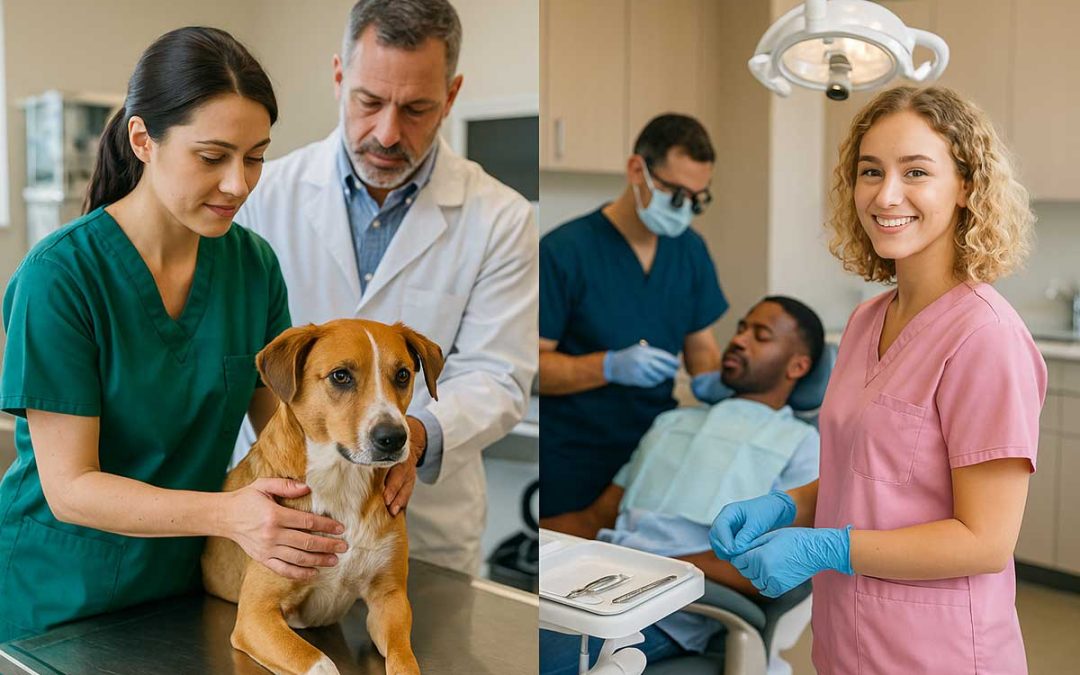
If you’re considering a hands-on, fast-paced career in healthcare but aren’t sure which path to take, two popular options include dental assisting and veterinary assisting. While both are rewarding in their own ways, they offer different types of patient care, training requirements, and long-term opportunities. So which is the better fit: working with people or pets?
Let’s break down what each role looks like, how to get started, and what kind of lifestyle you can expect.
What Each Role Really Does
What Dental Assistants Do
Dental assistants are vital to the efficiency and success of a dental practice. The responsibilities of a dental assistant combine clinical support, patient education, and administrative coordination. On the clinical side, they assist the dentist during procedures such as fillings, crowns, root canals, and even oral surgeries. They may also take dental x-rays, prepare trays with instruments, and ensure all surfaces are sterilized according to OSHA and CDC guidelines.
In addition to hands-on tasks, dental assistants help patients feel at ease during their visits, explain post-treatment care, and sometimes even walk patients through insurance billing or financing options. Their versatility allows them to work in general dentistry, pediatric dentistry, orthodontics, oral surgery, and other specialties, often within months of completing a dental assisting program.
What Veterinary Assistants Do
Veterinary assistants provide basic medical care and emotional support to both animals and their human caretakers. They often begin their day feeding animals, cleaning cages or exam rooms, and prepping the clinic for patient visits. During appointments, they help restrain pets, take temperatures, assist with vaccinations, or prepare samples for the lab.
Because animals can’t communicate symptoms, vet assistants rely on observation and close teamwork with veterinarians and vet techs to monitor health and behavior. In emergency or surgery settings, they may prep instruments, monitor vitals, or comfort animals as they recover. The emotional range of this role is wide, and assistants may help with newborn litters one day and support euthanasia procedures the next.
Work Setting, Daily Life and Challenges
Dental Office Life
Dental clinics are usually calm, clean, and highly regulated environments. Dental assistants often work in structured shifts with predictable hours, allowing for a more stable work-life balance. Most dental assistants work weekdays during regular business hours, making this a great fit for those with families or consistent schedules.
The workflow typically follows a routine rhythm: preparing rooms between patients, setting up materials, sterilizing tools, and assisting during procedures. Emotional challenges may include calming anxious patients or helping those in discomfort, but physical demands are minimal compared to vet clinics. There is also less risk of physical injury since there’s no handling of animals or heavy lifting.
Veterinary Clinic Life
Vet clinics can be fast-paced and unpredictable. Each day brings new patients with unknown conditions and temperaments. Veterinary assistants may find themselves lifting large dogs, handling scared cats, or cleaning up after sick animals. There’s also the emotional intensity of working with injured, abused, or aging pets.
The schedule may include evenings, weekends, and on-call hours, especially in emergency or 24-hour animal hospitals. Unlike dental offices, the workflow in vet settings is more variable. Assistants may shift between kennel duty, exam room prep, lab work, and front desk support quickly. For animal lovers, the emotional rewards are high, but so are the demands.
Training Requirements: Quick Comparison
Dental Assistant Programs
Most students can complete dental assisting school in as little as 12 weeks. Programs include hands-on training in real dental settings, preparation for certification, and exposure to both front- and back-office tasks. In Washington, dental assistants can work without a license, though additional certification (like sealant or x-ray) is often pursued for more responsibility and pay
Veterinary Assistant Programs
Veterinary assisting programs vary by school and state. Some clinics will train you on the job, while others require formal education or certification. Many programs take between 6 months to 1 year. While licensure isn’t required for assistants, advancing to a vet tech role (which involves more responsibility) does require an associate degree and passing the VTNE exam.
Career Growth: Where Can These Jobs Lead?
Dental Assisting Career Growth
Dental assisting is often seen as a gateway into higher-earning and more specialized roles. With experience and further training, many dental assistants pursue credentials like the Expanded Function Dental Assistant (EFDA), which allows them to perform more advanced tasks like placing fillings or taking impressions. Others move into office management, overseeing scheduling, billing, and patient coordination.
For those who want to continue their education, dental assisting can also lead to a career as a Registered Dental Hygienist (RDH), which generally requires a 2-year degree and offers significantly higher earning potential. The field also provides options to specialize in orthodontics, pediatric dentistry, or oral surgery, all of which offer advancement opportunities and higher salaries.
Veterinary Assisting Career Growth
Veterinary assisting is a common entry-level role that can lead to becoming a Veterinary Technician (vet tech), which typically requires a 2-year associate degree and licensure. Vet techs take on more complex responsibilities, such as administering anesthesia, performing lab tests, and assisting in surgeries.
Some veterinary assistants choose to specialize in areas like zoological medicine, wildlife rehabilitation, or emergency vet care, though these paths often require more education. Others move into management or client education roles within animal hospitals. Advancement is possible, but usually requires a clear plan and a willingness to pursue additional certifications or degrees.
Is One Career Easier Than the Other?
It depends on what kind of challenges you enjoy. Dental assisting can offer more predictable hours, fewer physical demands, and more routine work. Veterinary assisting tends to be more emotionally intense, physically demanding, and unpredictable. Neither path is “easy,” but both are deeply rewarding for the right personality type.
Final Thoughts: People or Pets?
If you enjoy clean, predictable environments, educating patients, and working one-on-one with a dentist, dental assisting may be your best path. If you love animals, don’t mind getting messy, and can handle emotionally tough situations, vet assisting could be a perfect fit.
At the end of the day, it’s about who you want to care for.
