Quick Summary
A 12-week accelerated dental assisting program in the Pacific Northwest typically runs $5,000 to $10,000 in total tuition. Longer one-year and degree-track programs can cost three to five times that, often without producing a meaningfully better result on day one of the job. At Pacific Northwest Dental Assisting School in Camas, Washington, our full 12-week program is $6,995 total, paid as a $250 deposit plus four installments. The price covers 144 classroom hours, 50 hours of hands-on internship at our on-site dental practice, Oregon Board of Dentistry approved radiography training, CPR certification, and the dental assistant certificate you bring to your first interview. The honest answer to “what should I pay” depends on how soon you want to start earning and how much classroom time you actually need to be ready.
- The 12-week PNWDAS program is $6,995 total tuition, paid as $250 deposit plus four installments.
- Tuition includes Oregon Board of Dentistry approved radiology training and CPR certification.
- Longer regional programs can cost three to five times as much without faster job placement.
- The biggest hidden cost of school is what you do not earn while you are still in classes.
What dental assisting school actually costs in Washington and Oregon
The honest range for dental assisting program tuition in the Pacific Northwest is wider than most students expect. Accelerated certificate programs (10 to 16 weeks) typically run $5,000 to $10,000 in total tuition. Community college dental assisting programs (nine to twelve months) typically run $8,000 to $15,000 in tuition once you add fees and required materials. Private programs that bundle dental assisting into a longer associate-degree pathway can run $20,000 to $40,000.
That spread is not really about the quality of teaching. It is about the length of the program and how much non-clinical content (general education credits, electives) is bundled into the price. A 12-week accelerated program teaches the same chairside skills, sterilization protocols, and radiology fundamentals as a one-year program. The longer programs simply spread that material across more weeks and add prerequisites that some employers do not require.
Our 12-week program tuition, broken down
Pacific Northwest Dental Assisting School’s full tuition for the 12-week program is $6,995. We structure payment so it does not require a single large check up front:
- $250 deposit to hold your seat.
- Installment 1: $1,686
- Installment 2: $1,686
- Installment 3: $1,686
- Installment 4: $1,687
That payment structure exists because most students cannot put the full tuition on a credit card and we do not think they should have to.
What you actually learn in the 12 weeks
A common worry about accelerated programs is that they skip material to make the schedule fit. Ours does not. The 12 weeks are structured so each week builds on the last.
Weeks 1 and 2 cover dental anatomy, OSHA infection control, and dental impressions. Weeks 3 and 4 add preventative care, coronal polishing, and radiography safety and technique. Weeks 5 through 8 move into moisture control, four-handed dentistry, pain and anxiety control, restorative amalgam and composite fillings, and provisional crowns. Weeks 9 and 10 cover dental specialties, periodontal assessment, and endodontics. Weeks 11 and 12 finalize with medical emergencies, clinical checkoffs, and graduation preparation.
Two important credentials are built into the program rather than billed separately. Our radiography training is Oregon Board of Dentistry approved, which makes graduates eligible to sit for the Oregon X-ray Test (a state requirement before a dental assistant can take x-rays in Oregon). CPR certification is also included, taught by our instructors. Both of those are line items at some other schools.
What the $6,995 actually buys
Beyond the curriculum itself, tuition covers:
- 144 hours of classroom study, taught by a lead instructor with more than 25 years of clinical and teaching experience. Class sizes are deliberately small.
- 50 hours of hands-on internship at our on-site dental practice. Most students are not farmed out to random offices to find their own preceptor. You learn in a real operatory under direct supervision.
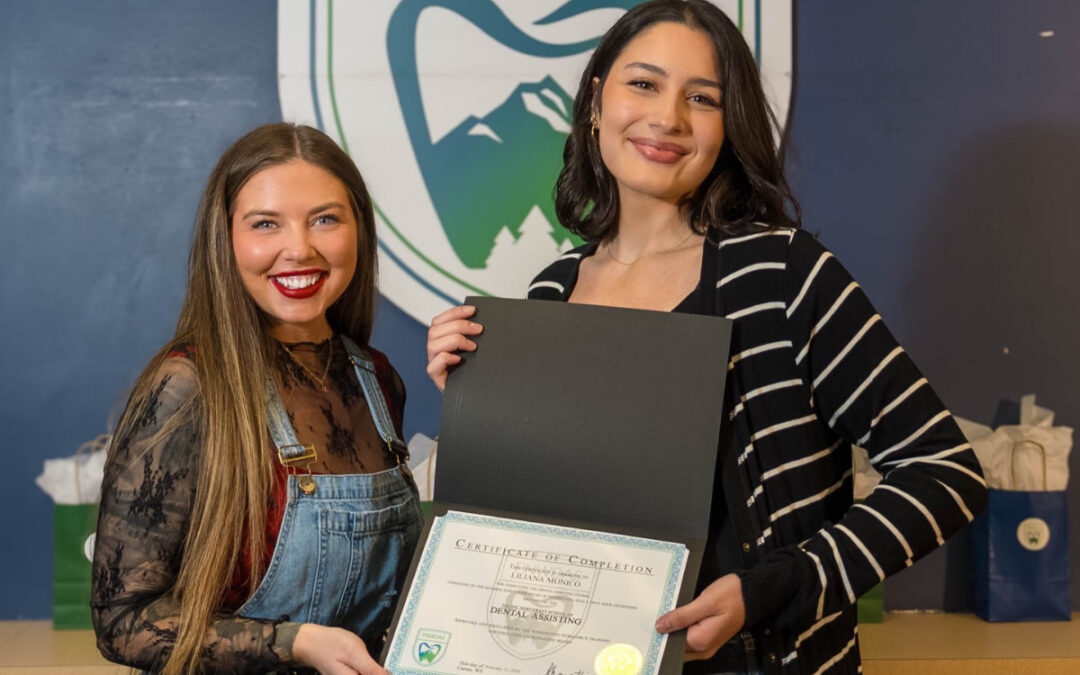
- A dental assistant certificate that you can hand to a hiring office on day one of your job search.
- A hybrid format that mixes structured online study with in-person classroom and clinical training, so the schedule works around real life.
Compare that to programs that take 9 to 12 months. They cover similar material with more lecture and more general education filler. Some of that content is genuinely useful. Most of it is not what a new dental assistant needs to be hired and trained on the job.
What you do not earn while you are in school is part of the cost
Most cost comparisons stop at tuition. They miss the bigger number.
A dental assistant in Washington or Oregon typically earns $40,000 to $55,000 per year in their first year, depending on specialty and metro. That is roughly $3,500 a month. Every additional month you are in school is roughly $3,500 in lost earnings. A program that runs six months longer than ours costs about $21,000 in lost income on top of any tuition difference.
Phrased differently: if a 12-week program produces the same career outcome as a one-year program, the one-year program costs you nine months of pay you will never get back. That is the part of the cost question that does not show up on any tuition page.
Hidden costs to ask any dental assisting school about
Tuition alone does not tell the full story. Before you enroll anywhere, ask whether the price includes textbooks and study materials, scrubs and required PPE, background check and fingerprinting, DANB Radiation Health and Safety (RHS) and Infection Control (ICE) exam fees, BLS or CPR certification, state radiology certification (Oregon’s X-ray Test requires a board-approved program), and the immunization requirements you will need (Hep B series, MMR titers, TB test). Some schools quote a low tuition number and add several hundred to a couple thousand dollars in mandatory extras at registration. At PNWDAS, CPR certification and Oregon Board of Dentistry approved radiology training are bundled into the program tuition. Asking up front is the easiest way to compare prices honestly.
Financial aid, payment plans, and employer reimbursement
Short certificate programs do not always qualify for traditional federal financial aid the way longer accredited college programs do. That is a real difference and worth understanding before you choose.
In-house payment plans are usually the most reliable option. Our installment structure spreads tuition across the program length so you can keep working part-time while you study. Workforce development funds may also apply: if you qualify, Washington’s WorkSource and Oregon’s WorkSource Oregon programs sometimes pay for short-term workforce training including dental assisting, with eligibility depending on employment status and income. GI Bill and military benefits eligibility is school-specific, so ask before you assume. And in some cases, an existing employer will sponsor a current front-desk or sterilization team member through dental assisting school in exchange for a commitment to stay. That conversation with a current employer is worth having if it applies.
The right financial aid mix depends on your situation. We walk through your options before you enroll.
How fast does the tuition pay itself back
This is the math that matters most.
At a $40,000 starting salary (the lower end of new-graduate dental assistant pay in the Vancouver and Portland metro), you will earn back the full $6,995 tuition in roughly seven weeks of work. At $50,000, it pays back in about six weeks. After that, the salary is yours.
A one-year program that costs $25,000 takes nearly seven months of earnings to pay back at the same wages. That is before counting the lost income during the extra months in school. Cheaper is not always better, but in dental assisting, the data favors faster.
Should you pick the cheapest option?
No. Pick the program with the strongest hands-on component, the most experienced instructor, and the schedule that lets you finish without quitting your current job.
A program that cuts price by cutting clinical hours will leave you underprepared on day one of your first job, which is its own form of expensive. A program that demands two years of full-time attendance for a credential you can earn in 12 weeks is asking you to pay in time.
The right balance is enough hands-on training to be employable, taught by someone who actually does the work, finished fast enough that you start earning in months, not years.
Schedule a call to talk through your options
Tuition is one decision. Whether dental assisting is the right move for you, what financial aid you qualify for, and whether our schedule fits your life are decisions worth a conversation. Get in touch with our Camas team and we will walk through the numbers with you.
Sources
- U.S. Bureau of Labor Statistics, Occupational Outlook Handbook: Dental Assistants on national and state-level wage data and job outlook for dental assistants.
- DANB Certified Dental Assistant exam information on what national certification covers and exam component fees.
