
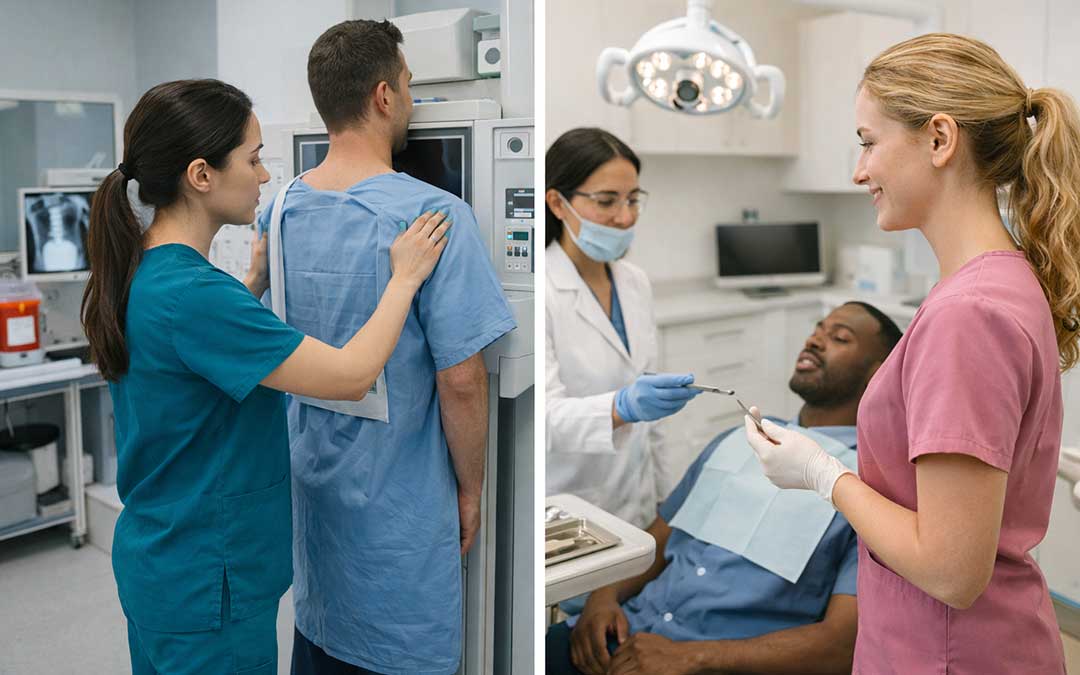
If you’re looking into healthcare careers that involve imaging, two paths might stand out: radiologic technology and dental assisting. Both offer rewarding work, a chance to help patients, and hands-on use of imaging equipment. But if you’re hoping to enter the workforce quickly and want a stable, people-focused career, dental assisting may give you a faster and more flexible starting point.
Let’s break down the key differences so you can see which path fits your goals.
Training Time and Cost
Radiologic technologists typically complete a two-year associate degree from an accredited program. These programs often require prerequisites and clinical rotations, and the total cost can range from $10,000 to $25,000 depending on the school.
By contrast, dental assisting programs like ours in Vancouver, WA can be completed in just 12 weeks. At a cost of $6,995, our accelerated training model allows you to gain skills and certifications needed to start working in under four months, a major advantage if you’re eager to earn and learn.
Day-to-Day Job Duties
- Radiology Techs operate medical imaging machines (like X-rays, CT scanners, or MRIs), often in hospitals or outpatient clinics. The job involves positioning patients, following strict radiation safety protocols, and working with doctors to capture diagnostic images.
- Dental Assistants also use imaging equipment, especially dental X-ray machines, but their role extends beyond that. You’ll also help with chairside procedures, sterilize tools, interact closely with patients, and support the dentist with everyday tasks.
If you’re looking for variety and patient relationships in a more personal setting, dental assisting offers more of that hands-on, daily connection.
Work Settings and Schedules
Radiologic technologists are more likely to work in hospital environments, which can mean overnight shifts, weekends, and high-pressure trauma cases. Dental assistants, on the other hand, typically work standard business hours in private dental practices, making it a better fit for those who want work-life balance.
Career Growth and Advancement
Both careers offer advancement potential:
- Radiology Techs can specialize in MRI, CT, or mammography with additional certification.
- Dental Assistants can grow into roles such as EFDA (Expanded Function Dental Assistant), Dental Office Manager, or even continue their education to become a Dental Hygienist.
The key difference is that dental assisting careers offer a faster starting point, which allows you to start earning sooner while exploring your future path.
Pay Comparison and Long-Term Career Potential
According to the U.S. Bureau of Labor Statistics:
- Radiologic Technologists: $70,240 average annual salary
- Dental Assistants: $47,350 average annual salary
While radiology may offer higher starting pay, it also comes with longer schooling, higher tuition costs, and more rigid job structures, often in hospital environments.
Dental assisting offers a quicker, more affordable path into the workforce, and that’s just the beginning. Many dental assistants go on to become:
- Expanded Function Dental Assistants (EFDAs)
- Dental Office Managers
- Dental Hygienists (with additional schooling)
- Treatment Coordinators or Insurance Specialists
These roles can lead to significantly higher salaries and greater responsibility, all while remaining in a professional, patient-centered setting.
Which Career Has More Long-Term Potential?
It comes down to what kind of healthcare environment you want and how quickly you want to start working. If you’re looking for:
- A faster entry into the healthcare field
- A predictable schedule in a supportive environment
- Ongoing opportunities for growth and specialization
- A career built around trust and patient relationships
Dental assisting offers a strong and flexible foundation for a lasting, fulfilling career.
Career Outlook: Job Stability and Demand
Dental assisting continues to offer strong employment prospects for those seeking a reliable career path in healthcare. According to the U.S. Bureau of Labor Statistics, employment of dental assistants is projected to grow 6 percent from 2024 to 2034, which is faster than the average for all occupations.
An estimated 52,900 dental assistant openings are projected each year, driven largely by the need to replace workers who transition to other roles or retire. This steady demand underscores the long-term stability of the profession, especially in areas with expanding populations or limited access to oral health care.
Source: U.S. Bureau of Labor Statistics – Dental Assistants
Ready to Start a Career You Can Be Proud Of?
Our 12-week dental assisting program in Vancouver, WA gives you the skills, confidence, and clinical training to start working quickly. You’ll gain hands-on experience in real dental settings and be supported every step of the way.
