
Quick Summary:
Dental assisting stands out among trade school career paths thanks to its fast entry into the healthcare field, affordable training, predictable schedule, and long-term growth opportunities. This article outlines the advantages of becoming a dental assistant, including salary outlook, job stability, and upward mobility compared to other trades.
Key Points:
- Dental assistants can complete training and start earning in under a year, often debt-free
- The field offers strong job growth with over 50,000 openings projected annually through 2034 (BLS)
- Career advancement is possible through expanded duties, certifications, or promotion to office manager or dental hygienist
- Compared to trade school careers like medical assisting, phlebotomy, or cosmetology, dental assisting often provides a higher ceiling
Why Dental Assisting Beats Many Other Trade Healthcare Careers
Trade school healthcare careers vary widely. Some options include medical assisting, phlebotomy, pharmacy technician work, and more. Each role serves a different purpose in the healthcare system, but not all lead to the same level of job satisfaction, flexibility, or advancement.
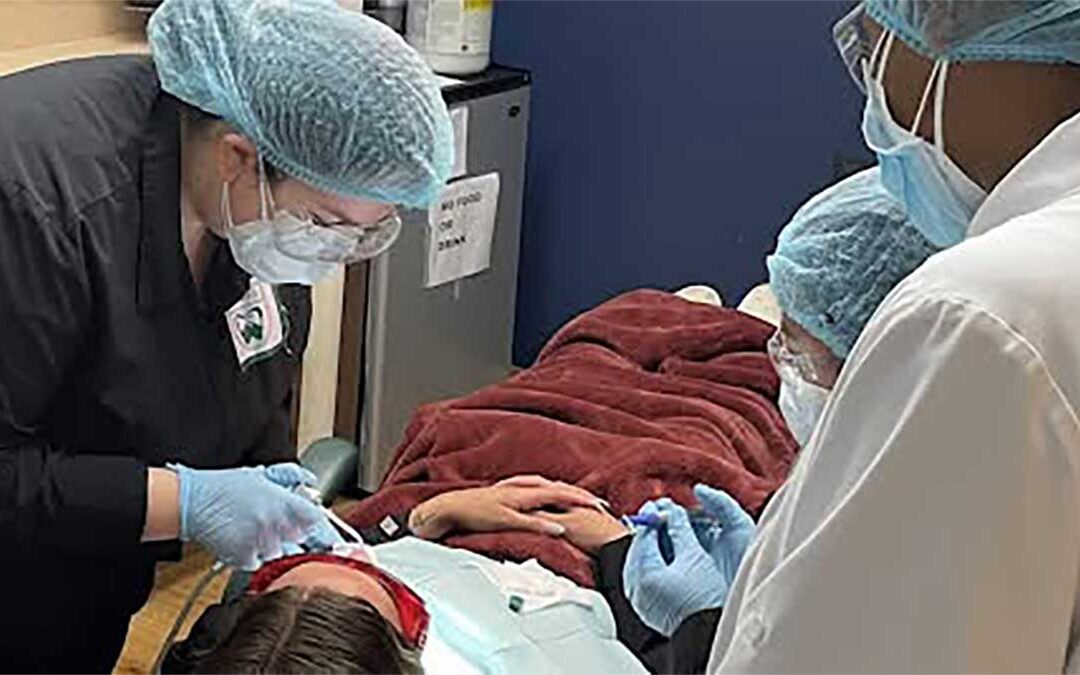
Dental assisting stands out for its blend of patient interaction, clinical skill development, and hands-on work that directly supports licensed dentists. Unlike careers that may be more isolated or repetitive, dental assisting fosters long-term patient relationships and the chance to master valuable clinical skills over time.
According to the U.S. Bureau of Labor Statistics (BLS), dental assistants earn a median salary of $45,320 per year as of May 2023, with top earners bringing in over $59,000 depending on location and experience.
Fast, Affordable Training with Real ROI
Dental assisting is one of the most efficient pathways into a healthcare career. Unlike other allied health programs that can take one to two years, our dental assisting program takes just 12 weeks, making it one of the fastest training options available.
This short timeline means students can complete their education, gain hands-on experience, and start earning in just a few months. The program’s affordability, combined with the option to work part-time during training, helps many students avoid debt entirely. For those looking to change careers quickly or achieve financial stability without long years of school or large student loans, dental assisting offers a practical and accessible solution.
In contrast, radiologic technology programs often require two or more years of training and carry significantly higher tuition costs. For many, that’s a barrier to entry, especially if they’re eager to join the workforce and start building experience.
Career Growth and Upward Mobility
Dental assisting doesn’t just stop at chairside support. Graduates can pursue certifications in radiology, infection control, coronal polishing, and expanded functions depending on their state’s regulations.
Many also go on to become dental office managers, treatment coordinators, or even apply to dental hygiene school after gaining experience. This mobility makes dental assisting one of the few trade careers with a built-in ladder to better pay and leadership opportunities.
Compare this to phlebotomy, where the role remains limited to blood draws, or nursing assistant roles that often experience higher burnout rates.
A Predictable, Professional Work Environment
Dental assistants usually work in clean, well-lit private practices with consistent daytime hours. This predictable schedule allows for better work-life balance and stability.
By contrast, careers in hospital-based imaging like radiologic technology may involve night shifts, weekends, and exposure to more physically demanding or emotionally intense situations.
In most dental offices, assistants are treated as valued team members who contribute to the overall patient experience. The office environment is often collaborative and supportive, making it a great choice for people who want a welcoming workplace with room to grow.
Dental Assisting Is More Than a Job It’s a Career Path
If you want a trade school career that leads somewhere, dental assisting offers long-term value. While other trades like cosmetology or massage therapy have merit, they often lack benefits, predictable income, or advancement potential.
Dental assisting builds a strong clinical foundation in infection control, anatomy, radiography, and patient communication skills that are transferable across other healthcare fields. It also opens doors to future licensing and higher pay.
Some students even begin their journey in dental assisting before later becoming dental hygienists, treatment coordinators, or entering dental school. It’s an excellent stepping stone that pays well even as an entry-level role.
Job Outlook and Demand
Employment of dental assistants is projected to grow faster than the average for all occupations, with approximately 52,900 job openings per year expected from 2024 to 2034 as practices expand and workers retire or move to other careers, according to employment projections adopted by O*NET based on Bureau of Labor Statistics data.
That steady demand creates long-term job security and stability, especially in a healthcare sector that is always in need of trained, reliable support staff.
Affordable Education and Return on Investment
Dental assisting school is not only fast, it’s cost-effective. Students can complete their training and begin earning without massive debt. This creates a strong return on investment that makes dental assisting particularly appealing for career changers or recent graduates including those shifting from service jobs like barista work to dental assisting.
In some programs, externships or clinical placements lead directly to full-time employment, making the transition from student to professional smooth and efficient.
Is Dental Assisting the Right Choice for You?
If you’re interested in working directly with patients, want to make a difference, and prefer a structured environment where every day is a little different, then a dental assisting career deserves strong consideration.
With opportunities to grow, affordable training, and a strong job outlook, it remains one of the most practical and rewarding healthcare paths you can start without a four-year degree.
